
For over a decade, I’ve worked in data. I’ve seen the rise of “Big Data,” the obsession with “Data-Driven” cultures, and the endless quest for the perfect dashboard. But as I stood on stage at Data Day 2025, looking at the theme “Agent with a Licence to Change,” I realized that the ground beneath us has shifted more in the last 18 months than in the previous ten years.
We are operating in a world where technology has finally outpaced our processes. The hype cycle is deafening. Executives expect magical, immediate solutions from AI , while we in the trenches are staring at the reality of infrastructure debt and data governance.
There is no blueprint for what we are doing. We are building the plane while flying it. And in this chaos, I’ve found that the most dangerous thing a leader can be right now is blindly “data-driven.”
The AI Productivity Paradox
In the traditional “data-driven” model, the goal was to remove human bias. We wanted to follow the numbers where they led. But AI has introduced a new variable: infinite production of plausible-sounding noise.
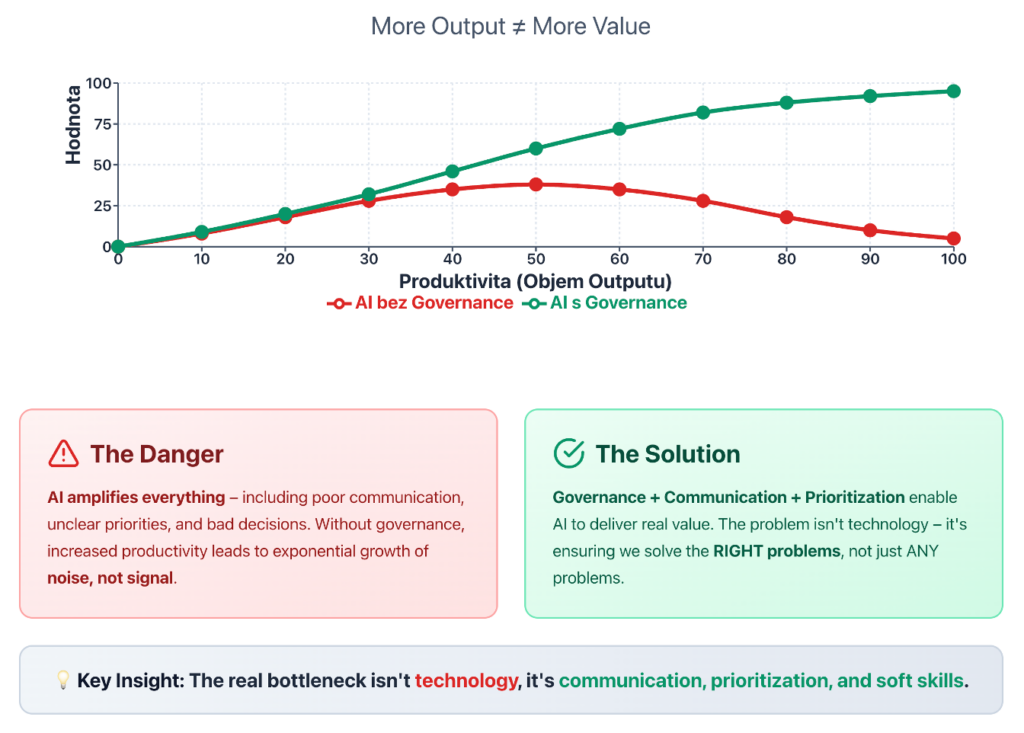
We are facing an AI Productivity Paradox. AI tools allow us to generate code, queries, and reports at a speed we’ve never seen. But more output does not equal more value. If we aren’t careful, increased productivity just leads to an exponential growth of noise rather than signal.
When you hand a powerful AI agent to a user without guardrails, you aren’t democratizing data; you’re democratizing chaos. AI amplifies everything—including poor communication, unclear priorities, and bad decisions
This is why I advocate for being Data-Informed, not just Data-Driven.
The Data-Informed Safety Net
I wrote about the data-informed concept back in 2023, but it is even more relevant today. Being data-informed means using data as a foundational input, but combining it with past experience, intuition, and judgment
In an era of AI hallucinations, the “human in the loop” isn’t a bug; it’s a feature. The biggest leap our teams need to make right now is not in Python or SQL, but in Business Acumen and Critical Thinking. AI provides the answers, but we must validate if they are correct and, more importantly, ensure we are solving the right problem.
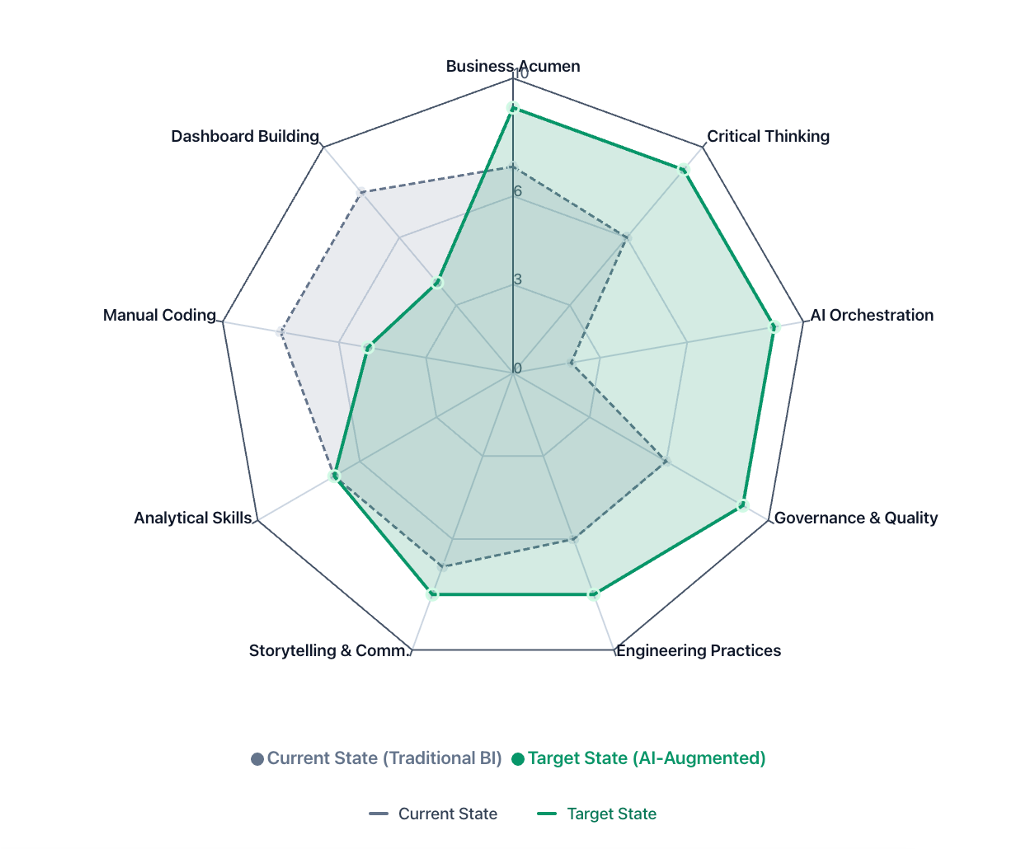
If “data-driven” means letting the GPS drive the car, “data-informed” means using the GPS but looking out the window to make sure you aren’t about to drive off a cliff because the map hasn’t been updated.
Navigating the Paradoxes
Transitioning a BI team to an AI-first model isn’t linear. At Livesport, we are currently navigating two massive paradoxes that define our daily work.
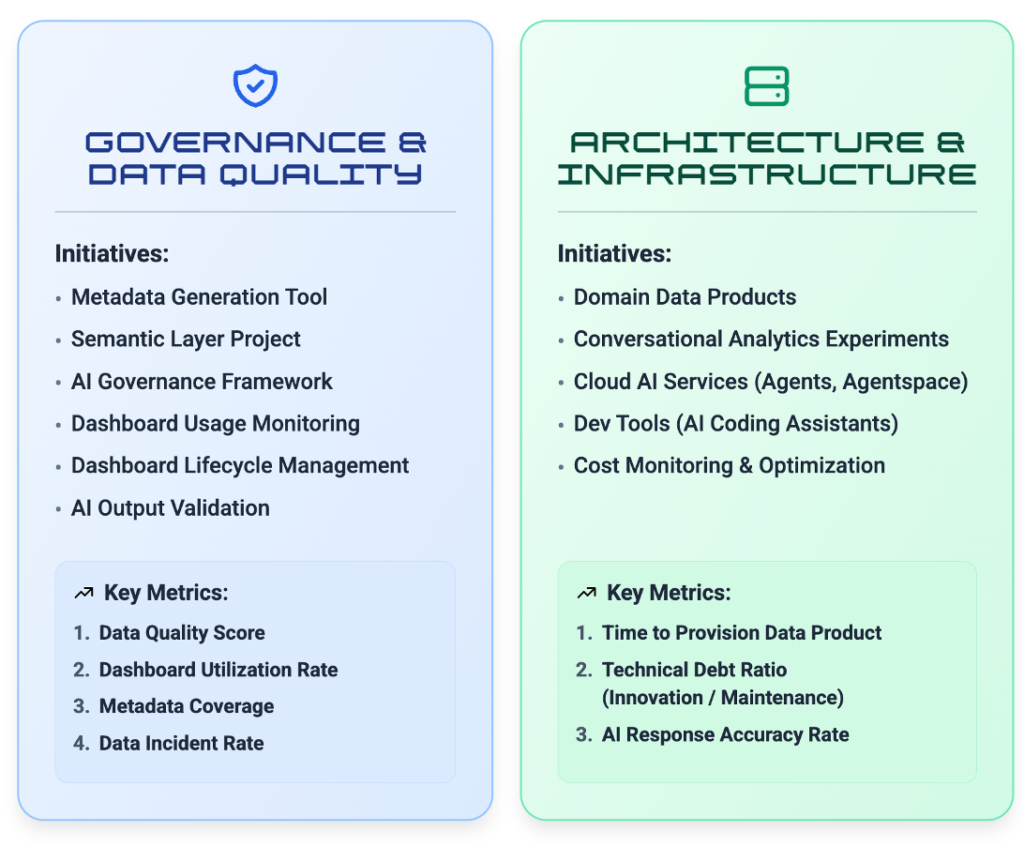
1. The Governance Paradox
Common wisdom suggests that to democratize data, you should remove barriers. However, in the AI age, we found the opposite to be true. More access equals more governance needed, not less.
When anyone can ask an AI agent anything, who ensures the answer is correct?. Data quality issues become exponentially more dangerous when they are hidden behind a conversational interface. GDPR compliance and audit trails become murky.
We are moving from a centralized model where we controlled the output, to a decentralized model where we must strictly govern the inputs—the semantic layer, the metadata, and the guardrails.
2. The Dashboardless Paradox
There is a popular narrative that “dashboards are dead” and we will soon just talk to our data. I disagree.
Imagine a pilot flying a plane.
- System: “Current airspeed?”
- Pilot: “I don’t know, you tell me.”
- System: “Analyzing request…”

That is a disaster waiting to happen. You cannot have a conversation about the state of the business if you don’t have situational awareness. We need a hybrid consumption model.
- Strategic Dashboards remain for executive insights and stability.
- Conversational Analytics (AI) take over the ad-hoc questions and exploratory analytics
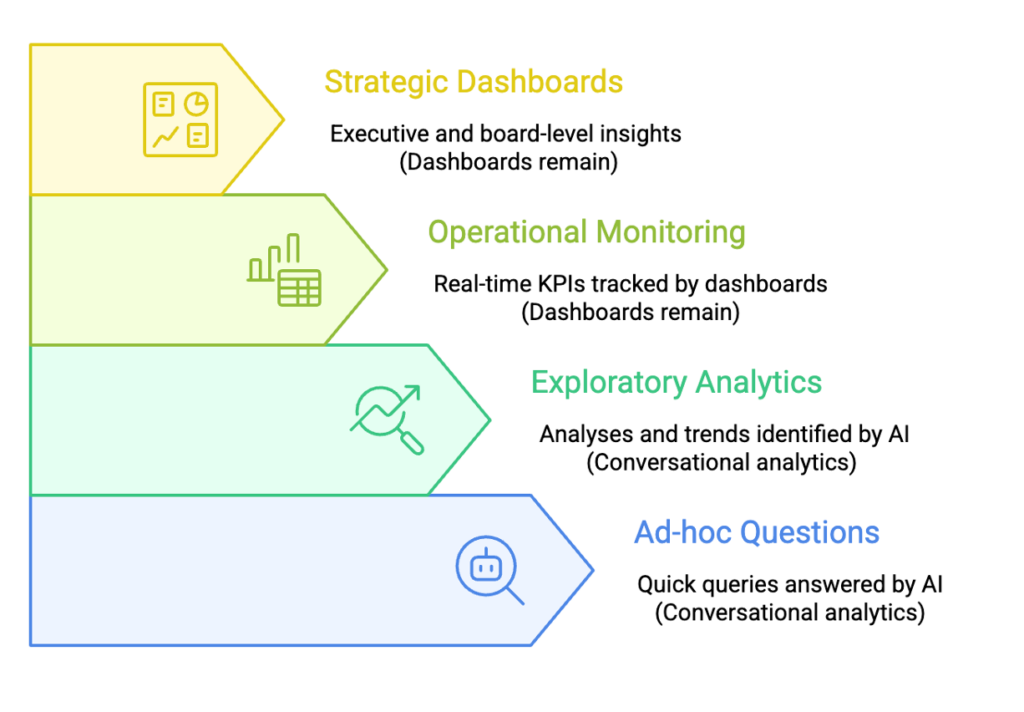
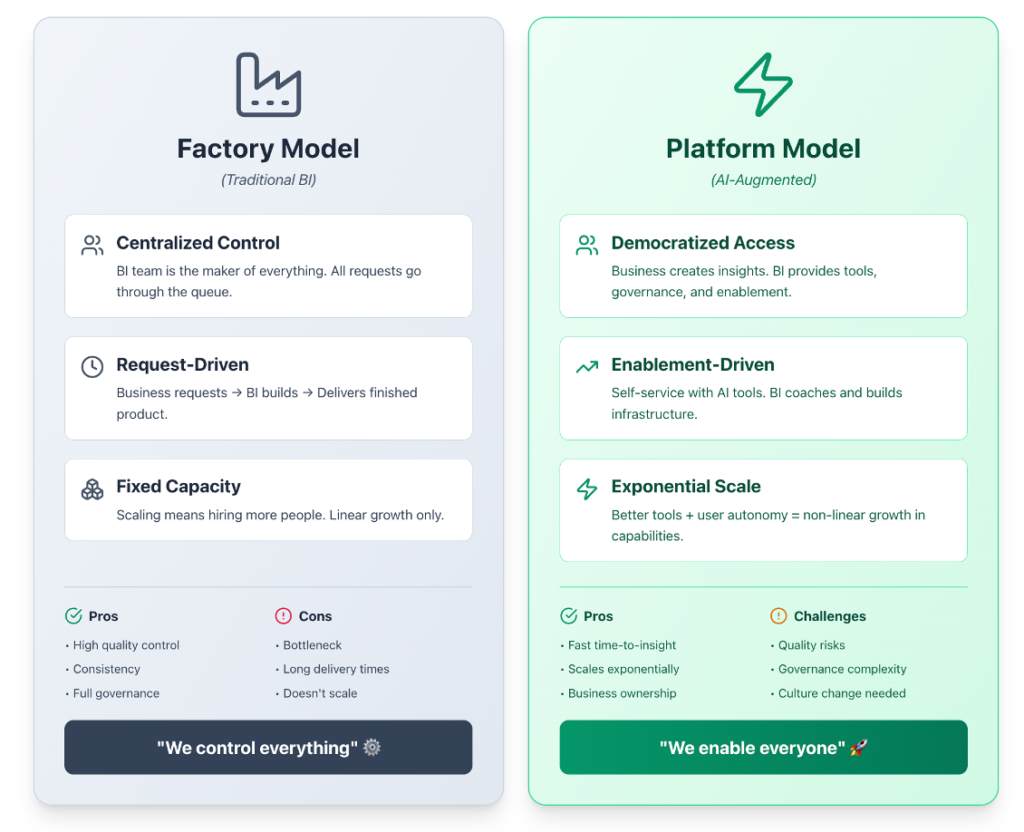
We aren’t killing dashboards; we are making them purposeful. We are moving away from being a “Report Factory” where we churn out endless charts, to a “Platform Model” where we provide the tools for business users to find their own answers.
The Human Transformation
The hardest part of this transformation isn’t the technology—it’s the people.
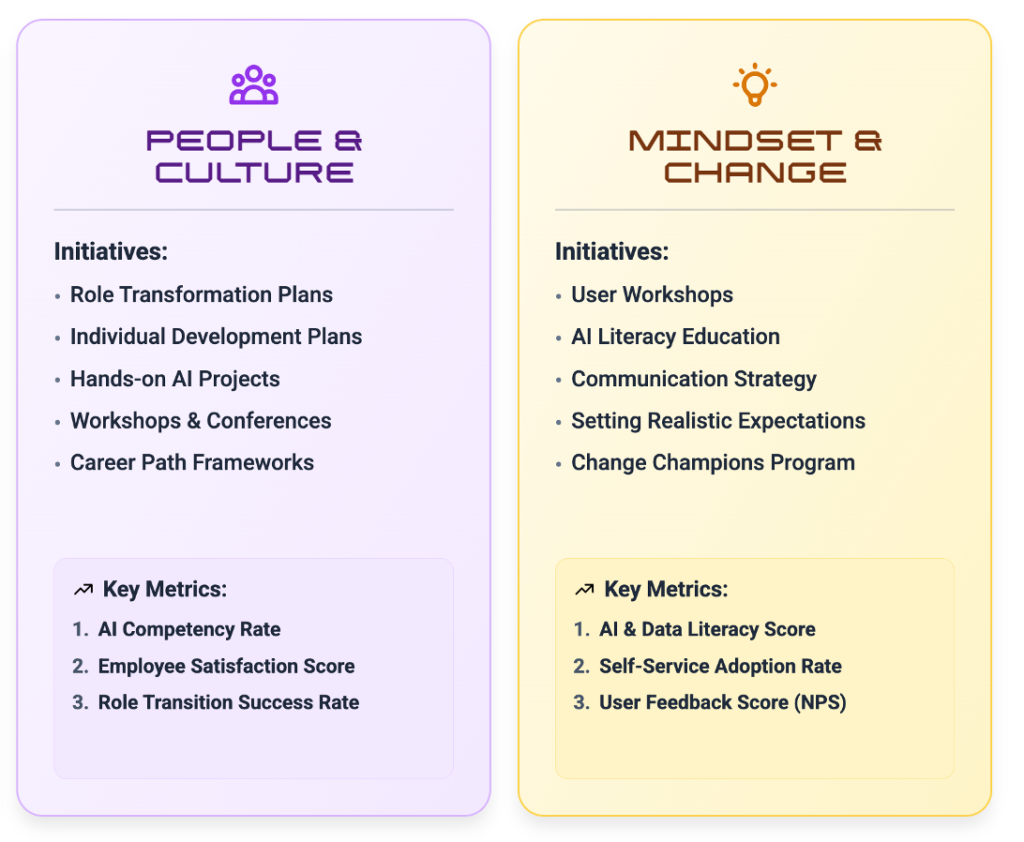
We are asking our teams to shift from being “gatekeepers” who control the data to “enablers” who teach others how to use it. This is a terrifying shift for many analysts. Their value proposition is changing from “I know how to write the SQL query” to “I know how to orchestrate the AI agent.”
We see a distinct “Curve of Change” in our teams. It starts with Denial (“Will this go away?”), moves through Resistance (“I need a clearer plan!”), and eventually hits Acceptance (“I see the potential”).
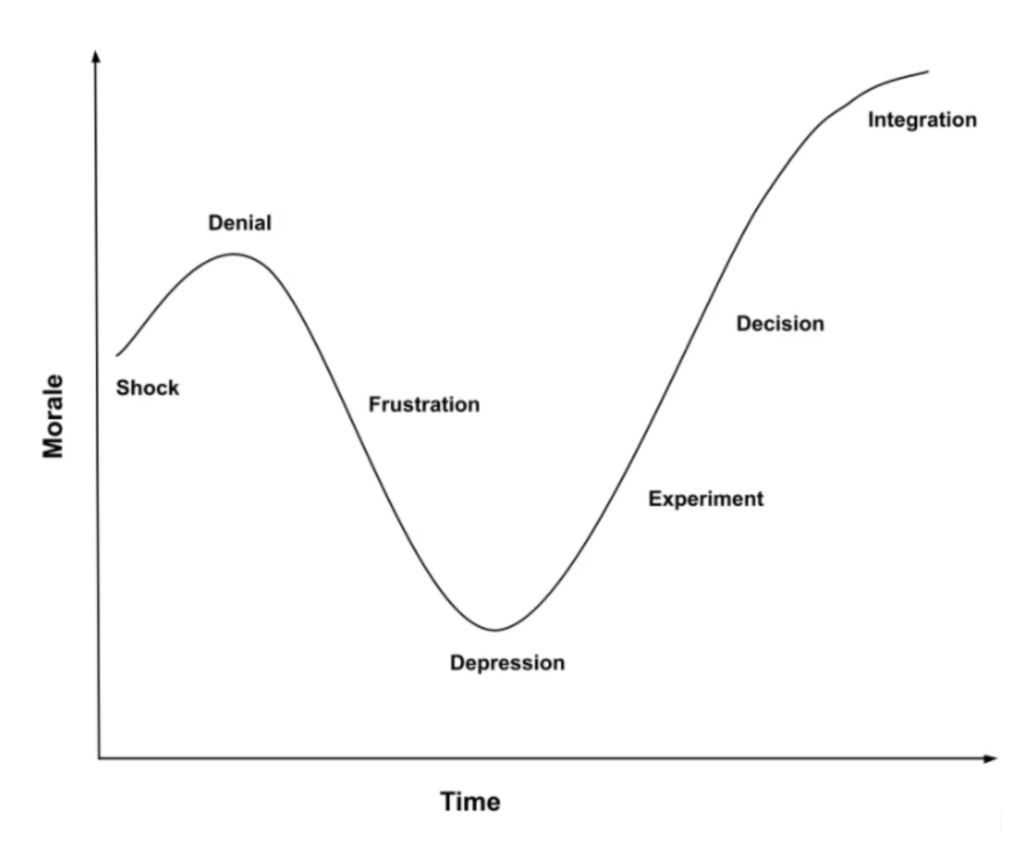
As leaders, our job is to provide psychological safety during this transition. We have to give our teams “permission to fail” safely without blame. We prefer to fail fast and learn rather than wait for the perfect moment, because inactivity is a greater risk than imperfection.
Stop Being a Factory
The traditional BI model is unsustainable. Linear growth in requests cannot be met with linear growth in headcount. We cannot hire our way out of the data deluge.
By adopting a data-informed, AI-augmented approach, we aim for exponential scale. We are building a semantic layer and metadata tools to let the business serve itself, while our data engineers focus on architecture and our analysts focus on high-value strategy.
There is no blueprint for this. Every company and every team must find its own way. But one thing is clear: the era of the BI team as a simple “service unit” is over. We are now the architects of the company’s intelligence.
We can teach the technology. The tools will get better. But the mindset—the willingness to be informed by data rather than ruled by it—that is the culture we must build by hand.

Leave a Reply